
Opera-loving director wants to make a movie about an opera-loving rubber baron who hauls a boat over a mountain in order to bring music to the jungle, and so he hauls an actual boat over a mountain. The lines between life and art, work and exploitation, madness and determination blur together in this documentary about the making of Fitzcarraldo.
Starring Werner Herzog, Klaus Kinski, Jason Robards. Directed by Les Blank. Narrated by Michael Goodwin.
Mary Versus the Movies Newsletter #86:
Episode 182 – Top Secret (1984)
Episode 183 – Burden of Dreams (1982)
Welcome to the Mary Versus the Movies newsletter! These films are not exactly the same vibe
This week: 4/24/2025
EPISODE 182 – TOP SECRET (1992)
An American rock star gets caught up in intrigue in Cold War East Germany. Or is it World War II? Nazis, Communists, whatever, right guys? Anyway, from the guys who made Airplane, it’s “what if Elvis made a spy movie”, and it’s pretty good.
Starring Val Kilmer, Lucy Gutteridge, Omar Sharif, Michael Gough, Jeremy Kemp, and one very odd cameo from Peter Cushing. Written by Jim Abrahams, David Zucker, Jerry Zucker, and Martyn Burke. Directed by Zucker-Abrahams-Zucker.
EPISODE 183 – BURDEN OF DREAMS (1982)
An opera-loving director wants to make a movie about an opera-loving rubber baron who hauls a boat over a mountain in order to bring music to the jungle, and so he hauls an actual boat over a mountain. The lines between life and art, work and exploitation, madness and determination blur together in this documentary about the making of Fitzcarraldo.
We watched Fitzcarraldo very early in the run of our show–all the way back in episode 10–and so when we saw that a restored version of BURDEN was playing locally, we jumped at the chance to see it. What we got wasn’t quite what we were expecting–we thought it would be about the rumored Kinski tantrums, but instead it focuses on Herzog’s own peculiar, even dangerous, filmmaking decisions, drawing a parallel between filmmaker and subject.
Starring Werner Herzog, Klaus Kinski, Jason Robards. Directed by Les Blank. Narrated by Michael Goodwin.
Coming at the end of the month:
HOLLYWOOD AVALON – MACGYVER: GOOD KNIGHT MACGYVER (1991)
We delve into some prime late 20th century nonsense when we watch a two-part episode of MacGyver, wherein our mulleted hero is conked on the head and wakes up in Camelot, uncovers an assassination plot against King Arthur, trades tips with Merlin, rescue a fair maiden, and does battle against Queen Morganna.
Borrowing lightly–very, very lightly, I mean, if it was any lighter it’d be the sun–from Twain’s Connecticut Yankee, the first episode is a pretty lackluster affair that plays out more like the worst Renaissance Faire you’ve ever been to–cheesy costumes, bad accents, and Camelot is really just a series of tents. Worse, there isn’t a single woman–not even Guenevere–and no famous knights other than a very uncharacteristic Galahad.
The second half, once MacGyver and Merlin go up against the evil Morganna, is a lot more fun. There’s a castle, some stunts, a few decent explosions, and the mystery of MacGyver’s first name is revealed. Actually, I don’t know if MacGyver’s first name was ever a serious mystery on the show, but this was the first time it was ever used in the show, and coming as it is in the final season, I guess it must’ve been some kind of lore.
So is it Arthurian? Oh, sure, definitely. Is it any good? Eh. I guess if you like cheesy action shows from the 1980s as they hobble their way into the 1990s, there are worse ways to spend two hours.
Starring Richard Dean Anderson, Dana Elcar, Time Winters, Christopher Collet, Christopher Neame, Robin Strasser, and Colm Meany. Written by John Considine. Directed by Michael Vejar.
What else are we up to this week?
Mary:
Epic films seem to be a theme around Easter, at least in the U.S., where DeMille’s The Ten Commandments plays every year on network tv, and you can usually find Ben-Hur and The Greatest Story Ever Told on TCM. I do catch Commandments every year–it’s campy and gaudy, with unending scenery-chewing and the kind of overwhelming Egyptian sets and costumes that hearken back to the silent era while taking advantage of Technicolor and VistaVision to deliver a something that, in different hands, could tip into the grotesque (which Ken Russell would do a generation later in his films, thank God). And yet, there are some truly effective scenes–the slaughtering of the first-born during the ten plagues still gives me chills as much as any horror movie, with its blood-curdled screams and creeping fog of death. It’s the best possible version of the spate of Biblical epics from the 20th century, cheesy and full of cheesecake, pious and knowing at the same time.
I saw that Lawrence of Arabia was showing on a Sunday morning recently, and jumped at the chance to finally see it on the big screen. It’s one of those films that I’ve seen parts of many times, always on a tv (often on a very small tv), but I think I’ve only sat and watched the entire thing once. Lord knows I don’t need to heap superlatives on it–it’s one of the most famous and influential films of all time and won numerous Academy Awards (though O’Toole losing to Gregory Peck in To Kill a Mockingbird still astounds me–Peck is great, don’t get me wrong, but O’Toole is a force of nature in Arabia). Without Lawrence, there’s no Dune, no Star Wars, no Jaws (another bifurcated film), no Mad Max films, even The Last Temptation of Christ.
Sure, it’s weird that there’s no women in it, and Alec Guiness as Prince Faisel is… iffy at best in terms of casting. And he’s not the only non-MENA actor playing an Arab (Anthony Quinn is Mexican, Jose Ferrer is Puerto Rican, and so on), all of which is arguably less problematic than centering a white Englishman in the Arab Revolt.
It’s interesting to watch the day after The Ten Commandments; I don’t know if we should call Arabia gritty, but it’s certainly a more grounded film compared to the ostentatiousness of Commandments. There’s no supernatural pillars of fire (though a knowing little scene where Lawrence refers to said pillar), nothing like Anne Baxter slinking around in a low-cut lamé dress (though Anthony Quinn’s gold-seeking tribal leader brings some needed fun). In short, the vibe is so completely different–and filmmaking in the early 1960s, with the fading of the studio system, was certainly different. This isn’t a faded attempt to recapture glory, like the Elizabeth Taylor debacle of Cleopatra. The point of the film, in a way that presages later films like Bonnie and Clyde, is to subvert the Hollywood Epic. The first half builds a conventional hero’s story, while the second half deconstructs the very idea, showing Lawrence as mad with a sadistic bloodlust, the British government as treacherous liars, and the American desire to get involved in the Great War as gross opportunism, all of which leaves the Arab fighters, desperately trying to unite into some kind of nation, vulnerable to what we know will be a hundred years of imperialism, despotism, and false starts. The screenplay begs us to abandon any idea of heroism and war, and instead experience how the madness of 19th century romanticism and Orientalism leads to the destruction of the soul. The second half works very hard to match All Quiet On the Western Front’s devastating rejection of war, and if it doesn’t quite reach that film’s stark horror, it’s not for want of trying. But, I suppose, like all war films, it falls into the trap that Truffaut identified–all anti-war films still glorify war. Lawrence of Arabia might be too good for its own good.
It’s a strange film to watch, knowing how the next hundred years would play out, how the United States would try to take over from the faded British Empire, how everything we see here on screen would eventually lead to things like 9/11, the Iraq War, the Syrian civil war, and so on. History is an unkind thing, and most of us are background characters, swallowed up in the sands like Lawrence’s servants.
And yet, as I said, the film is a marvel. F. A. Young’s cinematography might be some of the greatest ever put on film, from the famous “match” shot, to a sun whose heat leaps off the screen and into the viewer’s skin, to the dizzying surrealism of the boat in the canal.
Dennis:
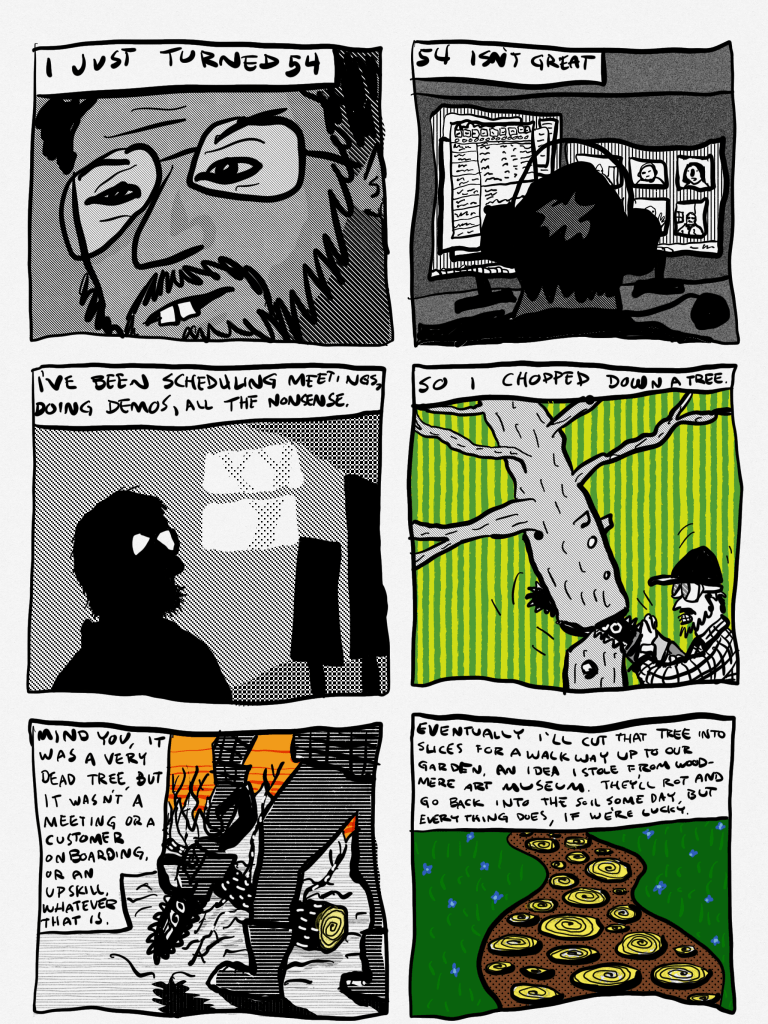
NEXT EPISODE: We’re going back to the Steve Martin well with All of Me.
Follow Us:
Bluesky: @maryvsmovies
Twitter: @maryvsmovies
Instagram: @maryvsmovies
Threads: @maryvsmovies
Mastodon: @maryvsmovies@mas.to
TikTok: @maryvsmovies
Discord Server: Ask for invite using the Contact button in the webpage menu!
Tumblr: https://at.tumblr.com/maryversusthemovies
YouTube: https://www.youtube.com/@MaryVsMovies
Letterboxd:
https://letterboxd.com/tlachtga/
Support the Patreon! www.patreon.com/maryvsmovies
 Mary vs the Movies